
A pendulum is the most predictable object in physics. Hang a weight from a pivot, swing it, and it traces the same arc at the same rhythm until friction stops it. Almost every automatic watch since 1931 has wound itself this way: one weight, one pivot, one arc, repeated a few hundred thousand times a year.
Introduce a second body to this system and the rules change. Energy passes between the two arms in a sequence that depends so sensitively on where it started that the smallest difference grows into a completely different path. Physicists call this deterministic chaos.
Conventional rotorone arm · one pivot
Chaotic Rotortwo arms · two pivots
Same wrist motion driving both. Live physics, not an animation.
Novachrono’s Chaotic Rotor harnesses this movement. The conventional rotor needs a real swing of the wrist to move through a useful arc; a sedentary wearer at a desk or a steering wheel rarely gives it one. A coupled pair behaves differently. The second arm keeps redistributing whatever motion it is given, answering inputs a single weight would simply ignore. The simulation above runs that comparison live, both rotors driven by the same wrist motion: watch the conventional weight settle into its arc while the second arm turns through revolution after revolution, and keeps going.
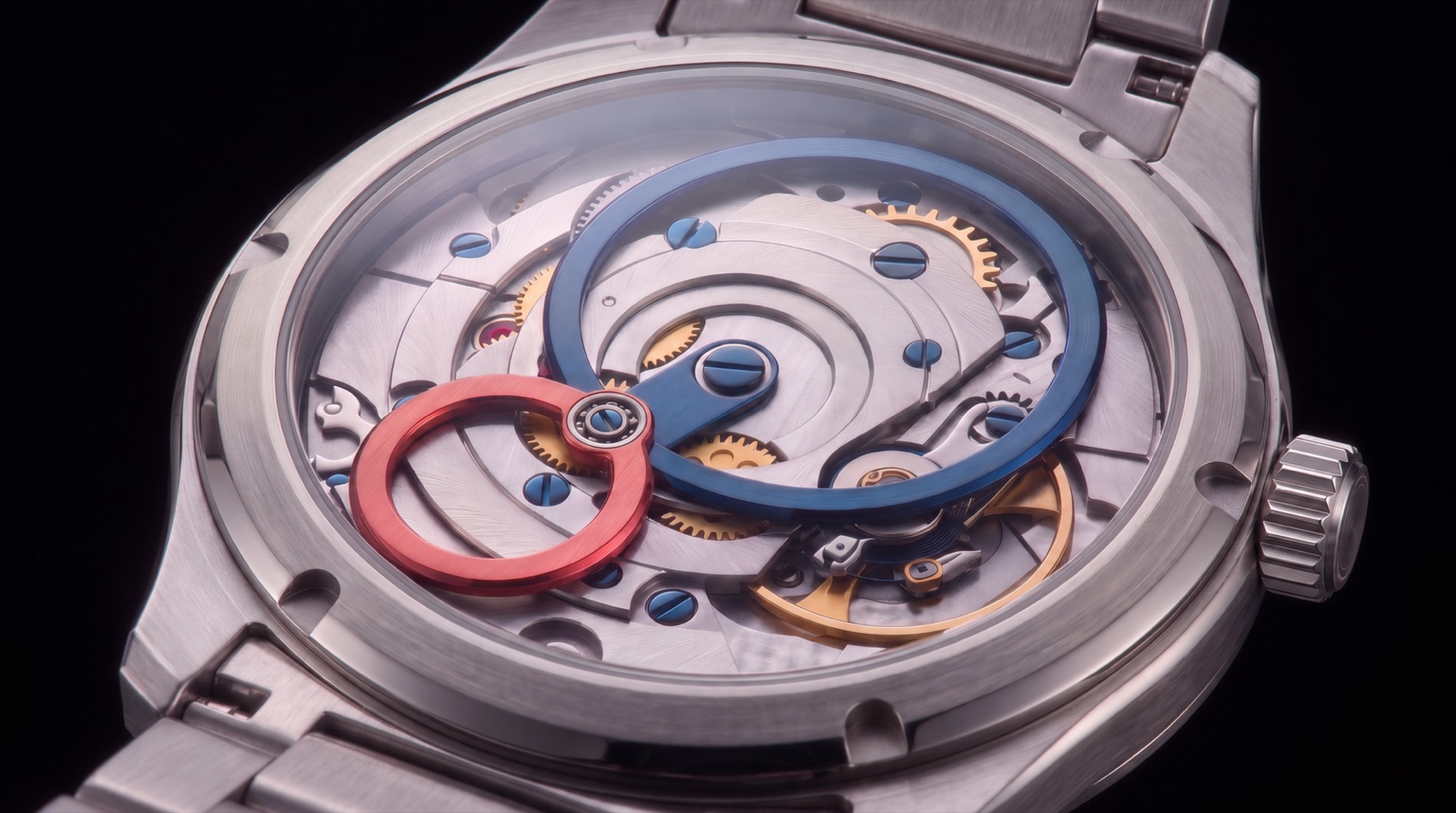
Two bodies trading energy with every movement of the wrist. The watch winds itself in a way that has never been seen before, because it never does the same thing twice.
Inquire
In 1931 the self-winding wristwatch arrived in its modern form, and the people it was built for walked. To the office, up the stairs, across the factory floor, ten or fifteen thousand steps a day.
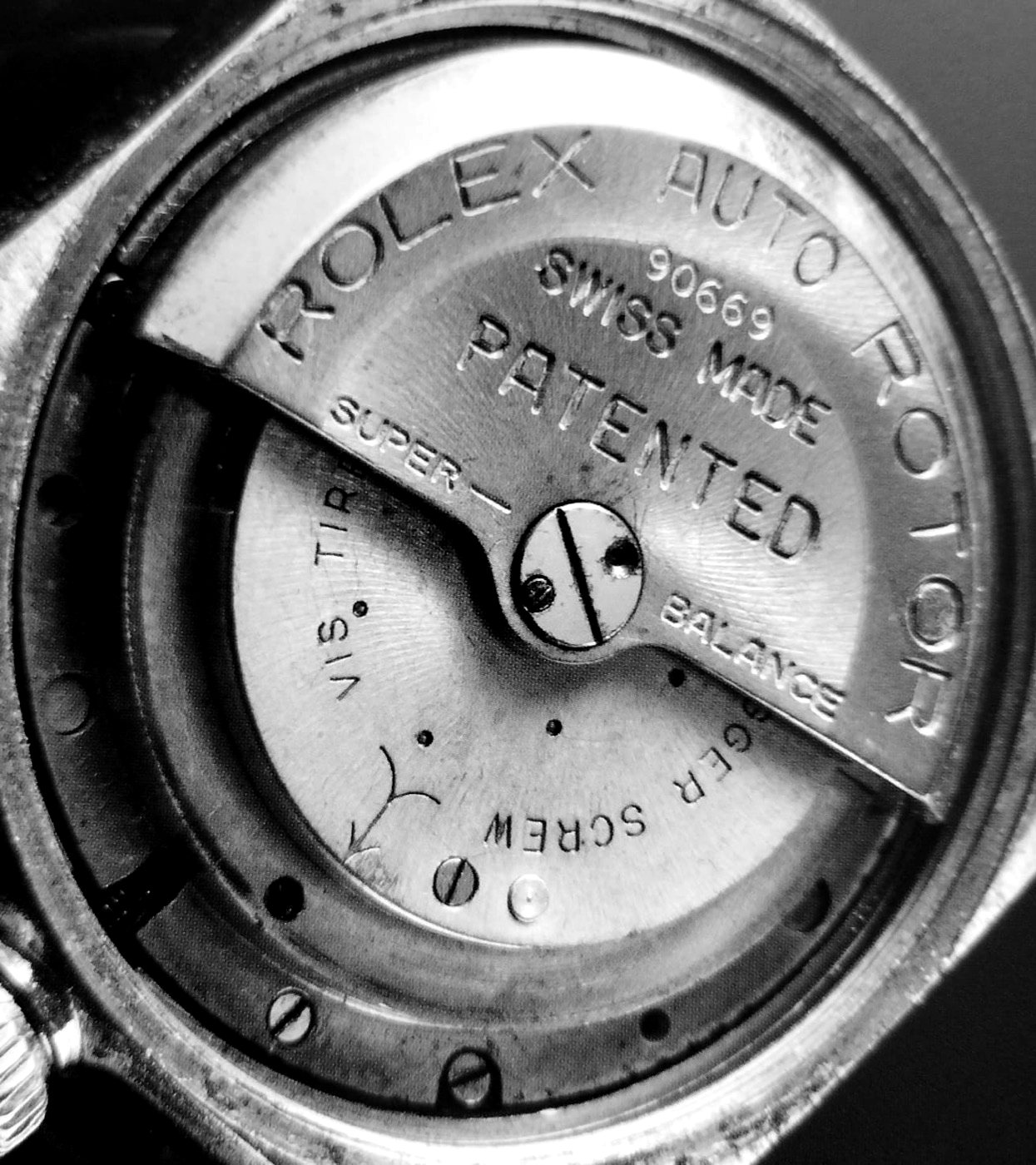
Every one of those steps swung the weight inside the case, and the mainspring stayed full. The mechanism did not need to be clever about motion.

Today the same wrist spends its day at a keyboard or behind a steering wheel. A desk produces a fraction of that movement, and what it does produce is small, slow and steady, the kind a single weight on a single pivot cannot turn into winding. The result is the most common complaint on every watch forum: the watch stopped overnight, on a wrist that never left the office. Ninety-five years on, the weight on the pivot has never been rethought.
The Chaotic Rotor is built for the wearer who exists now.
A mechanical watch should be in conversation with its wearer, not indifferent to them. Novachrono exists to make that true again: taking the parts of the watch that stopped evolving and giving them a future, in partnership with the brands and movement houses that carry the tradition forward.

